
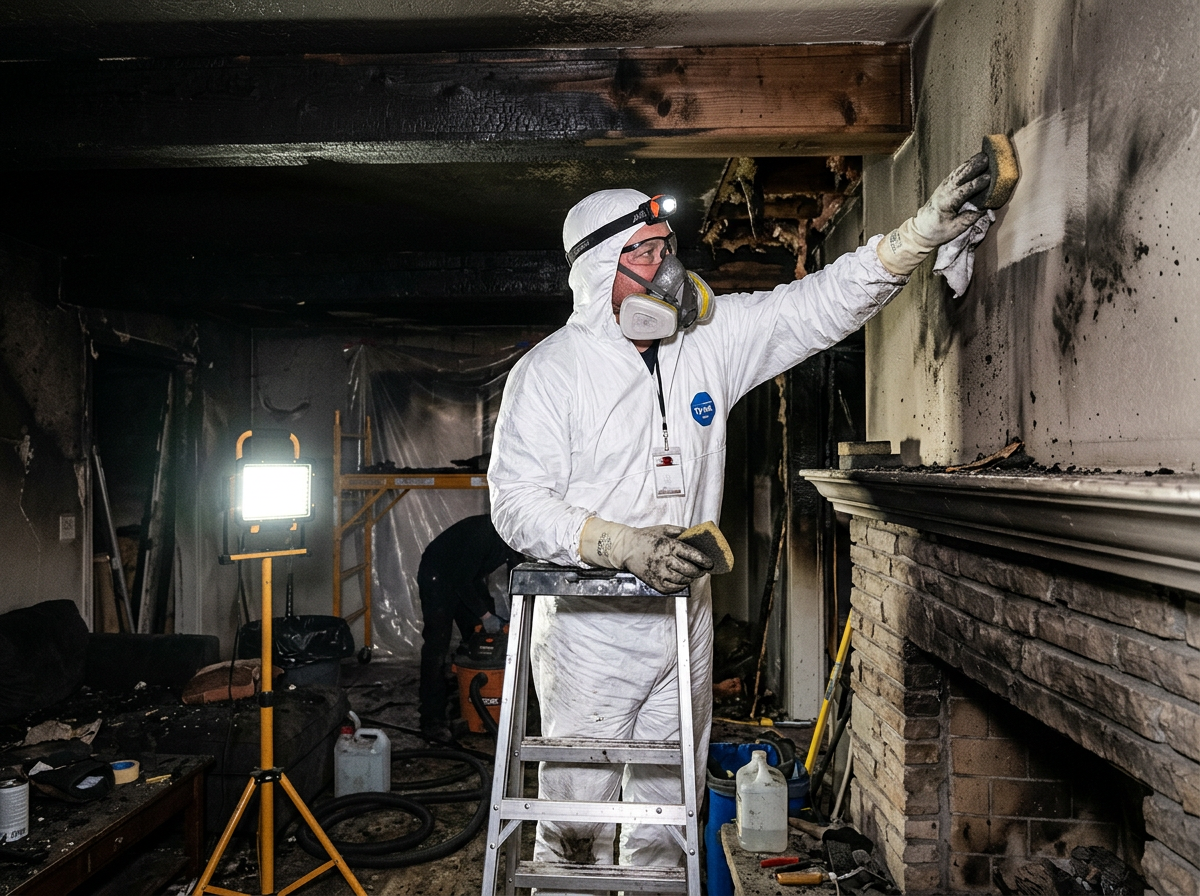
Cornish sits in northern Cache County along UT-23 as a small agricultural community near the Idaho border. Cold snowy winters and warm summers define the local climate, where older farmhouses and outbuildings face fire and smoke risks from heating sources and equipment used in daily operations.
Smoke can linger in these structures during winter months when temperatures drop and ventilation is limited. Crews based in Payson travel north to reach Cornish properties, focusing first on securing the building and managing any water that may freeze inside unheated spaces.
Nearby service extends to Lewiston and Richmond, allowing coordinated response across this corner of the state where agricultural buildings and older homes require careful assessment after any fire event.
Fire Damage Restoration Services in Cornish, UT
Fire Damage Restoration in Cornish
Utah Fire Recovery restores homes after fire and smoke events by first managing suppression water and securing the struc…
Details →Smoke Damage Restoration in Cornish
Targeted smoke damage restoration across Utah that traces soot paths through HVAC systems and unburned rooms while addre…
Details →Water Damage Restoration in Cornish
Suppression water from Utah fires soaks cavities and freezes fast above 4,500 feet, requiring targeted extraction before…
Details →Soot and Residue Cleaning in Cornish
Targeted soot and residue removal that identifies soot type first so stains lift instead of setting permanently.…
Details →Mold Remediation in Cornish
Targeted mold removal following delayed drying of fire-suppression water in Utah structures.…
Details →Around Cornish
We regularly work near:
- 📍UT-23
- 📍Cache County agricultural lands
- 📍Idaho border vicinity
Fire Damage Restoration in Cornish — Local Notes
- •Older farmhouses and agricultural outbuildings dominate the housing stock, with suppression water that can freeze rapidly in unheated structures during cold snaps.
- •Access follows UT-23, requiring crews to plan longer response routes from the southern Payson base when winter conditions affect travel.
- •The cold semi-arid climate brings deep snow and freezing temperatures that complicate drying and debris removal in the weeks after an incident.
Nearby cities we serve