
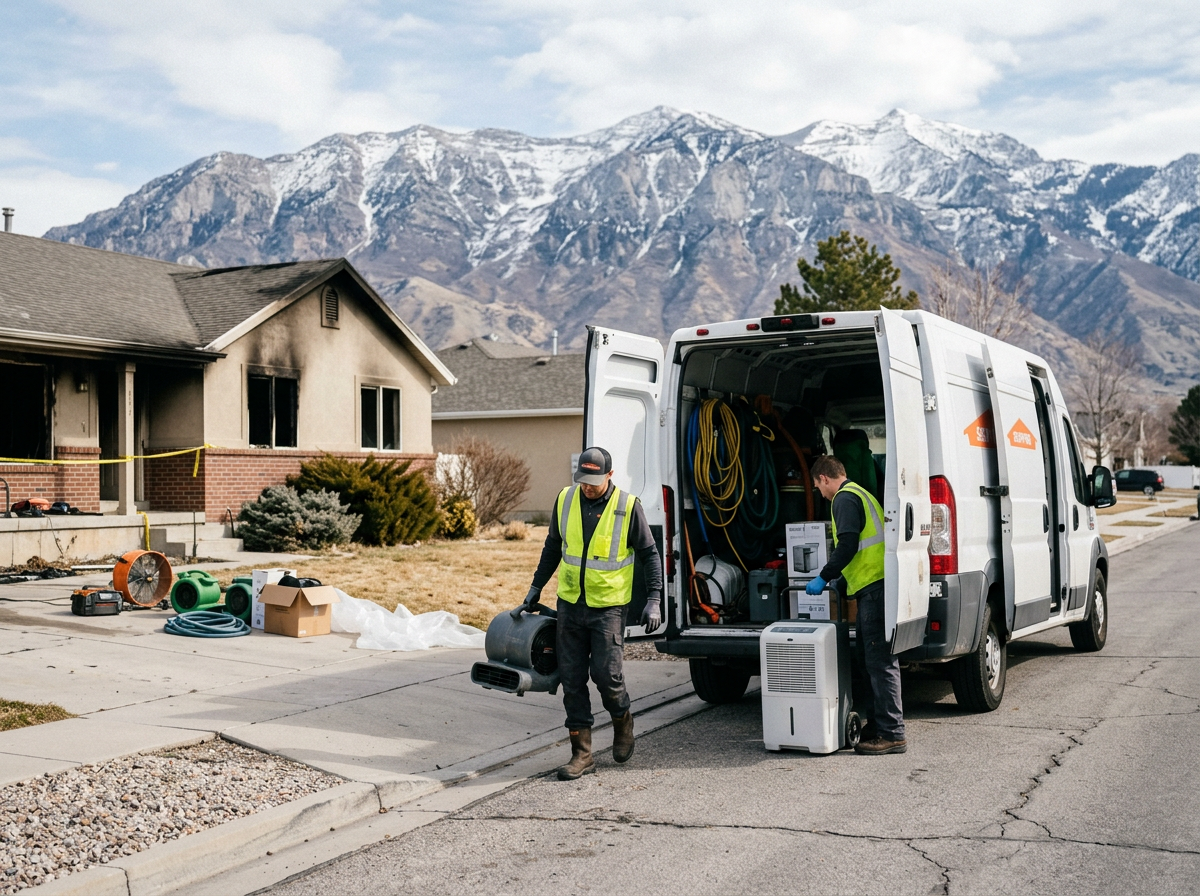
Hildale sits in Washington County on the Utah-Arizona line, a high-desert community reached from Payson by heading south on I-15 then east on UT-59. Wildland fires in surrounding juniper and sage can send smoke into homes built with stucco walls and tile roofs, where open layouts allow smoke to move through the structure quickly.
Mild winters and hot summers mean crews face fewer freeze issues than in northern Utah, but the long response distance from Payson requires fast securing of the property once on site. Smoke odors linger in the dry air and can affect neighboring properties across the border in Colorado City.
Restoration work focuses on removing soot from stucco surfaces and ventilating tile-roof attics where smoke collects. Utah Fire Recovery brings equipment suited to red-rock desert conditions rather than the inversion or timber issues found farther north.
Fire Damage Restoration Services in Hildale, UT
Fire Damage Restoration in Hildale
Utah Fire Recovery restores homes after fire and smoke events by first managing suppression water and securing the struc…
Details →Smoke Damage Restoration in Hildale
Targeted smoke damage restoration across Utah that traces soot paths through HVAC systems and unburned rooms while addre…
Details →Water Damage Restoration in Hildale
Suppression water from Utah fires soaks cavities and freezes fast above 4,500 feet, requiring targeted extraction before…
Details →Soot and Residue Cleaning in Hildale
Targeted soot and residue removal that identifies soot type first so stains lift instead of setting permanently.…
Details →Mold Remediation in Hildale
Targeted mold removal following delayed drying of fire-suppression water in Utah structures.…
Details →Around Hildale
We regularly work near:
- 📍UT-59 corridor
- 📍Utah-Arizona state line
- 📍Twin-city connection with Colorado City
Fire Damage Restoration in Hildale — Local Notes
- •Stucco exteriors and tile roofs common in Hildale allow smoke to penetrate porous surfaces and collect in attic spaces.
- •Wildland fires in juniper and sage around the UT-59 corridor create wind-driven smoke that travels into the community without valley inversion trapping.
- •Long drive from Payson means initial priority is boarding and securing the structure before full smoke and soot removal begins.
- •Mild winters reduce freeze damage from suppression water compared with higher-elevation Utah towns.