
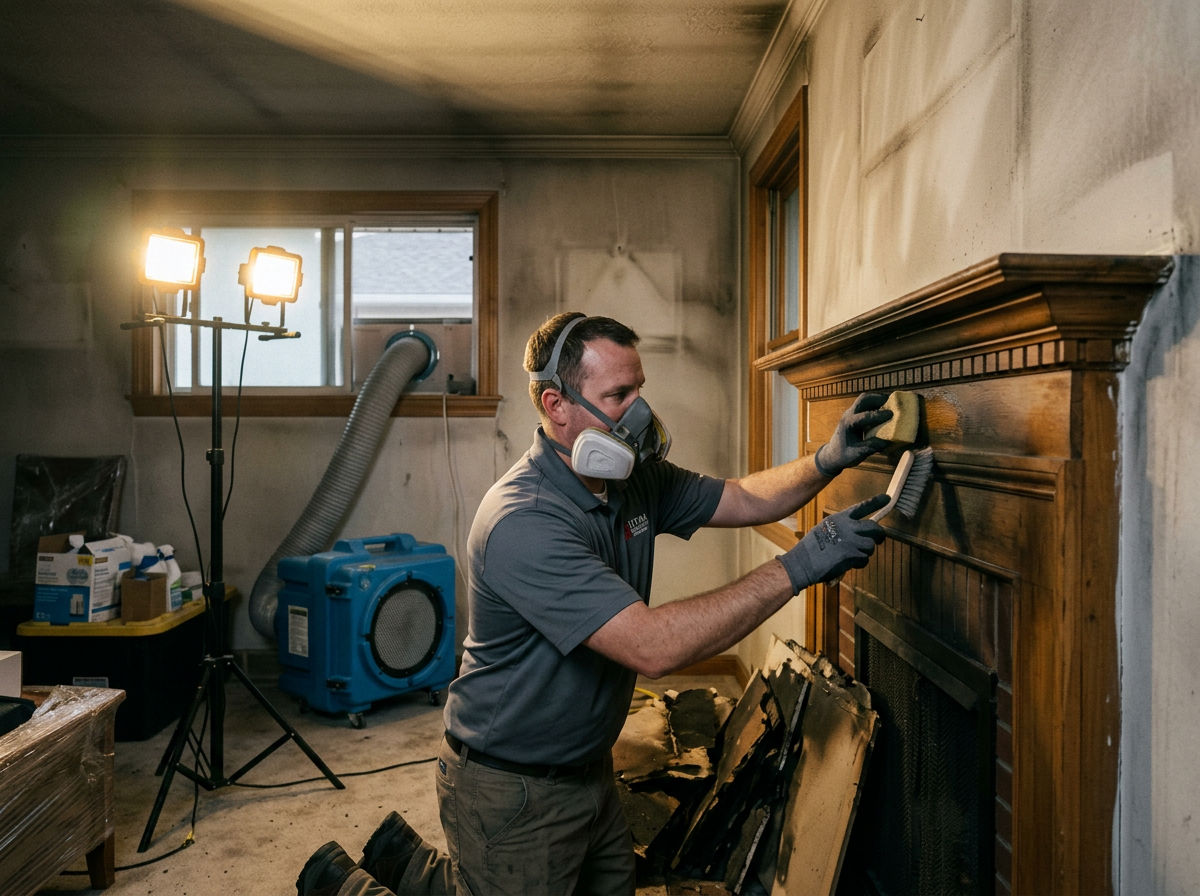
Smoke from Utah fires moves through HVAC ducts, stairwells, and ceiling plenums into rooms the flames never reached. Dry winter air above 4,500 feet carries fine particles that settle first on cold windows, exterior walls, and metal fixtures. In Payson homes, this creates visible lines along baseboards and hidden residue inside return-air cavities that standard cleaning misses.
Protein soot from kitchen fires stays invisible yet produces a sharp odor that clings to fabric and insulation. Dry soot brushes away with proper vacuum filtration, while wet smoke from smoldering materials smears and requires solvent cleaning to avoid setting permanent stains. Technicians must identify the soot type on site before any surface contact or the residue bonds permanently to porous materials.
Smoke Damage Restoration Near You — Choose Your City
Every city below has its own local Smoke Damage Restoration page with coverage details.
Washington County
Box Elder County
Utah County
Tooele County
Summit County
Cache County
Washington
Iron County
Wasatch County
Davis County
Box Elder
Summit
Weber County
Salt Lake County
Juab County
Morgan County
Cache
Thermal fogging penetrates cavities to neutralize odor in structures held by Wasatch inversion, but it is used only after source removal. Hydroxyl generators run continuously in occupied spaces where ozone would damage rubber or electronics; ozone is reserved for empty buildings with heavy protein residue. Both methods fail if suppression water left in wall cavities later releases trapped smoke particles during spring thaw.
Southern Utah jobs lack inversion trapping, so odor dissipates faster than in Cache Valley or Payson. Wildland-urban interface ember intrusion in Summit and Washington counties often leaves smoke residue without structural char, requiring full HVAC cleaning even when the building exterior shows no burn marks.
Technician insight
In Payson, the thing that catches most people out with Smoke Damage Restoration is how pre-1990 homes with single-pane windows pull soot straight to the glass during the first cold snap, and the inversion keeps the smell inside the walls until March even after you clean the obvious surfaces.
Payson ranch house after foothills fire
Smoke entered through the attic and traveled down the main duct run into the living room and two bedrooms. Cold windows showed clear soot lines while carpets and drywall behind furniture remained untouched. We isolated the HVAC, solvent-cleaned wet soot on metal registers, ran hydroxyl units for 72 hours, and returned the system to service once readings dropped below detectable levels.
Smoke Damage Restoration Services We Offer
✓Duct and HVAC Smoke Cleaning
Removes soot from supply and return lines that carry particles into every room after a fire, preventing re-deposition during normal heating cycles.
✓Odour Treatment and Thermal Fogging
Applies thermal fog or hydroxyl treatment only after visible soot removal to reach odor trapped in cavities and insulation.
✓Unburned-Room Smoke Cleaning
Cleans soot that migrated through doors, vents, and electrical outlets into rooms untouched by flames.
✓Textile and Soft Contents Deodorising
Treats drapes, upholstery, and clothing separately from hard surfaces to lift smoke odor without water damage.
✓Cold Surface Soot Removal
Targets first-deposit soot on windows, exterior walls, and metal that forms visible demarcation lines in winter conditions.
✓Stairwell and Plenum Smoke Extraction
Clears residue from vertical shafts and attic spaces where smoke rises and settles during inversion events.
How it works
- 1
Inspection and Soot Mapping
Technicians trace smoke paths through ducts and stairwells, noting cold-surface deposits and testing for hidden moisture from suppression water.
- 2
Source Containment
HVAC systems are isolated and contents in unburned rooms are protected before any cleaning begins.
- 3
Surface-Specific Cleaning
Dry soot is HEPA-vacuumed, wet soot is solvent-cleaned, and textiles receive separate deodorising based on residue type.
- 4
Odour Treatment Selection
Thermal fogging or hydroxyl generators are chosen according to building occupancy and soot chemistry, then run until readings stabilize.
- 5
Verification and Final Clearance
Air and surface samples confirm residue removal before HVAC is returned to service.
Pricing
Final scope depends on smoke travel distance, number of affected rooms, and whether HVAC or textiles require separate handling; call for inspection.