
2026-09-14 ·
How to Remove Soot from Walls After a House Fire in Payson
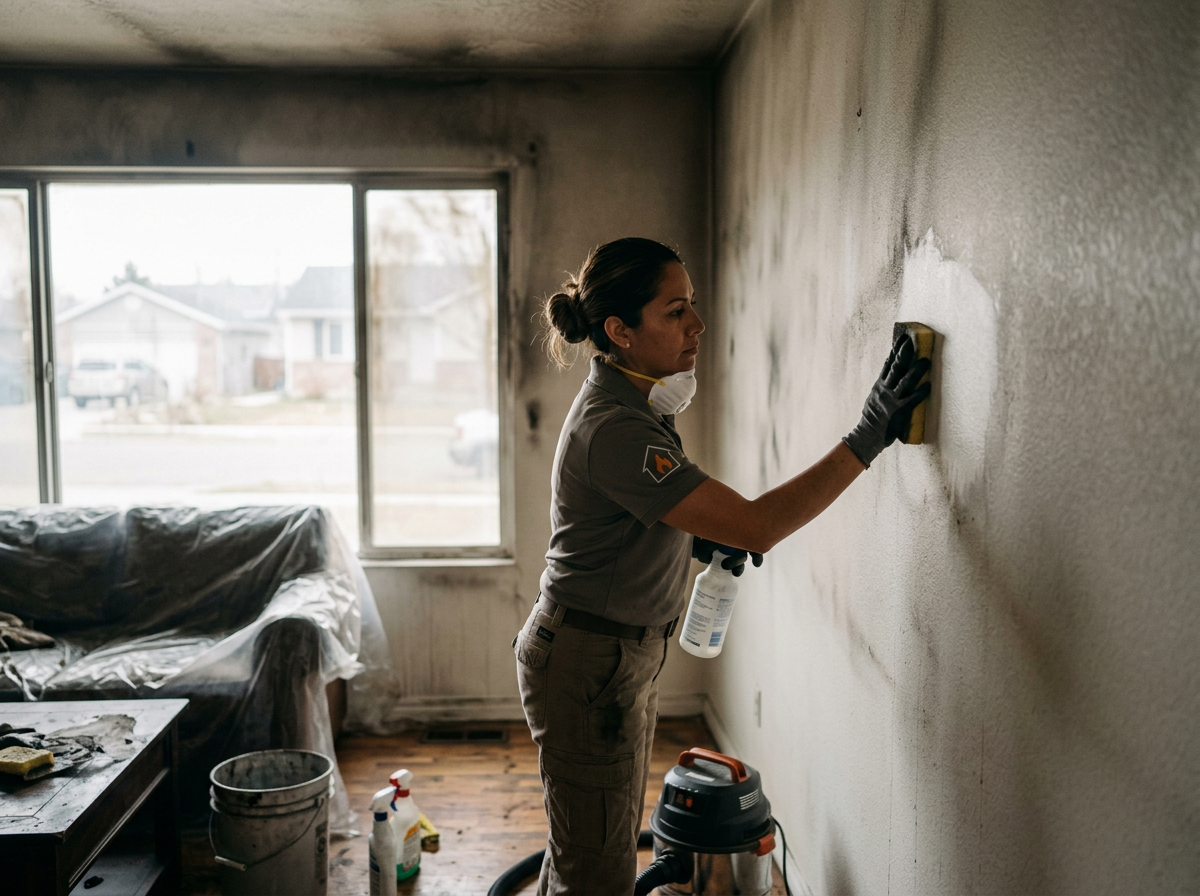
Removing soot from walls after a house fire in Payson starts with identifying the soot type, then using the matching solvent or emulsifier on a test section before full application, followed by repeated rinsing and drying to prevent re-soiling. Dry soot from wood or paper lifts with dry sponges or vacuum brushes first. Wet soot from plastics or synthetics requires alkaline cleaners applied in small sections. Protein soot from kitchens calls for enzyme-based solutions that break down the residue without heat. Work proceeds from ceiling to floor to avoid drips, with fans set to exhaust outward once surfaces are rinsed.
Identify the Soot Type Present
Payson homes affected by wildland-urban interface fires often receive smoke that travels from distant burns, depositing a mix of residues on interior walls. Dry soot appears powdery and black, responding to brushing or vacuuming before any liquid touches it. Wet soot feels sticky and smears easily, needing an emulsifier to suspend the oils. Protein soot from cooking fires leaves a yellowish film that sets into porous drywall if not treated promptly. Testing a hidden corner with each product prevents color change or etching on painted surfaces. Local conditions such as low humidity accelerate particle settling, so inspection should occur as soon as access is safe. Local wildfire smoke effects on homes in southern Utah County explain how wind patterns carry these residues into unburned structures.
Prepare Surfaces and Control Dust
Begin by sealing off the room with plastic sheeting taped at seams to keep loosened soot from migrating to unaffected areas. Remove or cover furnishings and flooring. Use a HEPA vacuum with brush attachment to lift loose particles without rubbing them deeper into texture. Wipe walls with dry chemical sponges in one direction only, changing sponges frequently to avoid redepositing material. In Payson’s dry climate, static can cause particles to cling, so anti-static wipes help during this stage. Allow any suppression water that reached walls to evaporate fully before wet cleaning begins; at the area’s elevation, overnight freezing can leave ice crystals that carry soot farther into cracks. Keep windows cracked on the leeward side for ventilation while running exhaust fans.
Apply Targeted Cleaning Methods
For dry soot, continue with successive dry-sponge passes until no more color transfers, then follow with a mild detergent solution rinsed thoroughly. Wet soot requires an alkaline cleaner applied with a soft cloth, allowed to dwell briefly, then rinsed with clear water and dried immediately. Protein soot benefits from an enzyme cleaner that digests organic components; apply, agitate gently, rinse, and repeat. Always work in small sections and change rinse water often. Multiple passes are normal because soot embeds in the surface texture of drywall and paint. After cleaning, inspect under angled lighting to spot remaining film. Soot and residue cleaning outlines the same sequenced approach used on site.
Manage Lingering Odor in Local Conditions
The Wasatch inversion can trap smoke odors inside Payson homes through winter, even after visible soot is gone. Increase airflow with cross-ventilation on days when the inversion lifts. Place bowls of activated charcoal or baking soda near walls for several days to absorb residual molecules. Run a dehumidifier if indoor moisture rises during rinsing, since excess humidity can reactivate odors. Odor may reappear when temperatures drop at night, requiring additional ventilation cycles. Persistent smell after surface cleaning indicates particles inside cavities or HVAC ducts, which calls for further inspection.
When Further Help Is Needed
If soot remains after two full cleaning cycles or if walls show staining that returns, professional equipment such as air scrubbers and thermal foggers may be required. Utah Fire Recovery at 675 S 100 W #3, Payson, UT 84651 handles these steps for fire damage restoration across the county. Fire damage restoration details the inspection process used when wall cleaning alone does not resolve the issue. Homeowners in nearby Mapleton or Salem facing similar deposits often combine wall work with attic assessment to catch hidden residue.