
2026-09-14 ·
What Affects Fire Damage Restoration Timelines in Utah County
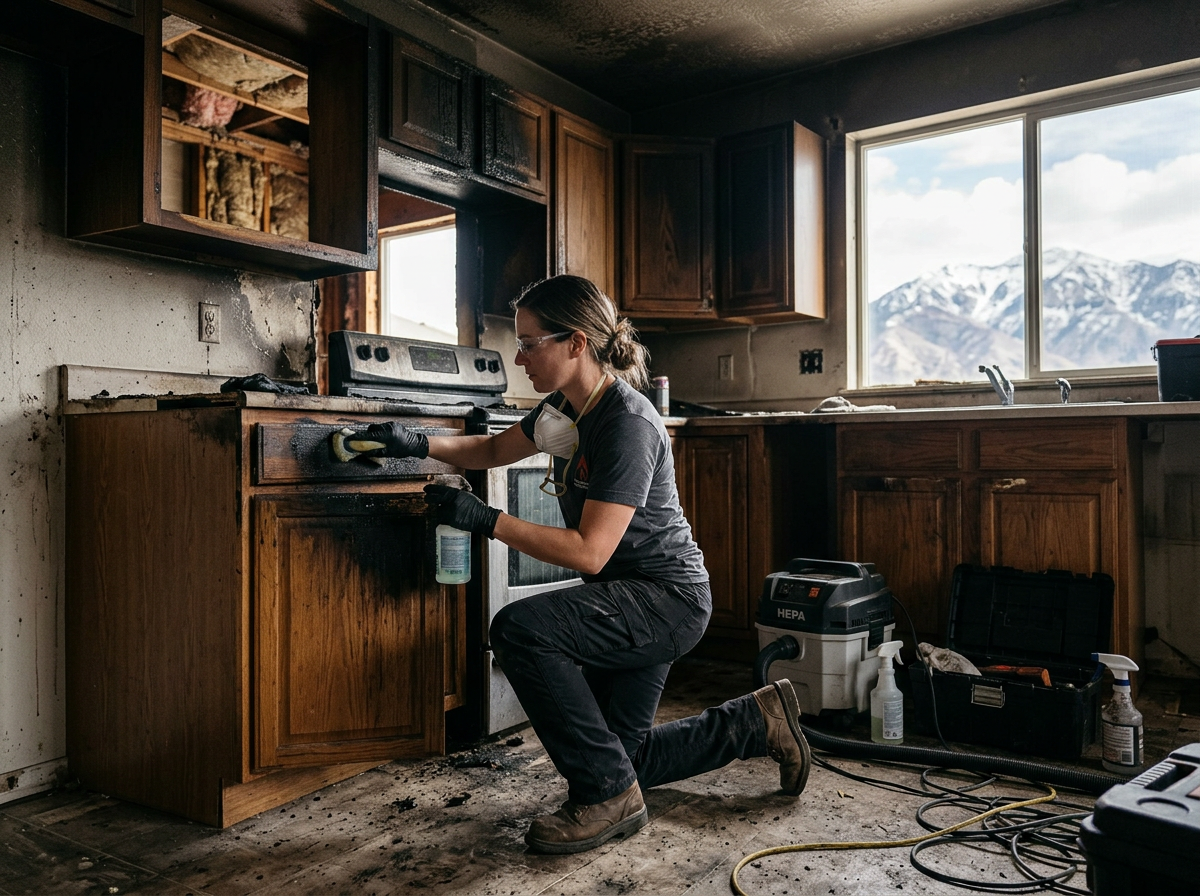
Fire damage restoration timelines in Utah County stretch from several days for contained smoke issues to multiple weeks when freezing suppression water, wind-driven soot migration, or persistent winter odors enter the picture. The specific soot type and local climate conditions determine how quickly crews can stabilize the site and complete cleaning.
Soot Type and Required Cleaning Approaches
Different soot residues demand distinct removal techniques that directly extend project duration. Protein soot from kitchen fires bonds quickly to surfaces and often requires specialized emulsifiers before any painting or sealing can begin. Dry soot from wood or paper travels farther on Utah's arid winds and settles into HVAC systems, adding inspection and duct cleaning steps. Wet soot from plastics or synthetics leaves acidic residues that corrode metals within hours, forcing earlier neutralization work. Crews working from the Payson base at 675 S 100 W #3 routinely adjust equipment and dwell times based on residue testing rather than following a fixed schedule. These variations mean fire damage restoration projects rarely follow identical calendars even within the same neighborhood.
Suppression Water and Elevation Effects
Water used to extinguish fires behaves differently once temperatures fall below freezing at Utah County elevations. Pooled water in attics or wall cavities can ice over, blocking airflow and forcing crews to pause drying equipment until thaw occurs. Ice expansion also cracks drywall and plaster, creating additional demolition that must finish before moisture mapping resumes. In milder southern Utah County zones without inversion layers, water evaporates more steadily and shortens this phase. Teams therefore monitor daily lows and adjust dehumidifier placement to prevent secondary mold growth during any extended cold snaps.
Wasatch Inversion and Odor Persistence
Winter inversions trap smoke particles and volatile compounds close to the valley floor for days or weeks at a time. Homes in Mapleton or Salem experience slower odor dissipation because the trapped air prevents natural ventilation that would otherwise carry residues away. This condition requires longer use of air scrubbers and thermal fogging before final clearance testing. Smoke damage restoration work often pauses during strong inversion events to avoid re-contaminating freshly cleaned surfaces. Property owners in higher bench areas sometimes see faster progress simply because they sit above the inversion layer.
Wildland-Urban Interface Smoke Migration
Fires burning in the wildland-urban interface send fine smoke particles into homes that never caught flame. These particles penetrate insulation, upholstery, and electrical boxes, requiring full-home inspections that add days to the initial assessment. Local Wildfire Smoke Effects on Homes in Southern Utah County details how wind patterns carry residues across otherwise undamaged properties. How Wind-Driven Fires Affect Homes on Payson’s East Bench explains similar movement along the east side of the city. Each of these scenarios lengthens the overall timeline because crews must locate and treat hidden deposits rather than focusing only on visibly burned rooms.