
2026-09-14 ·
Dealing with Water Used in Firefighting in Payson Homes
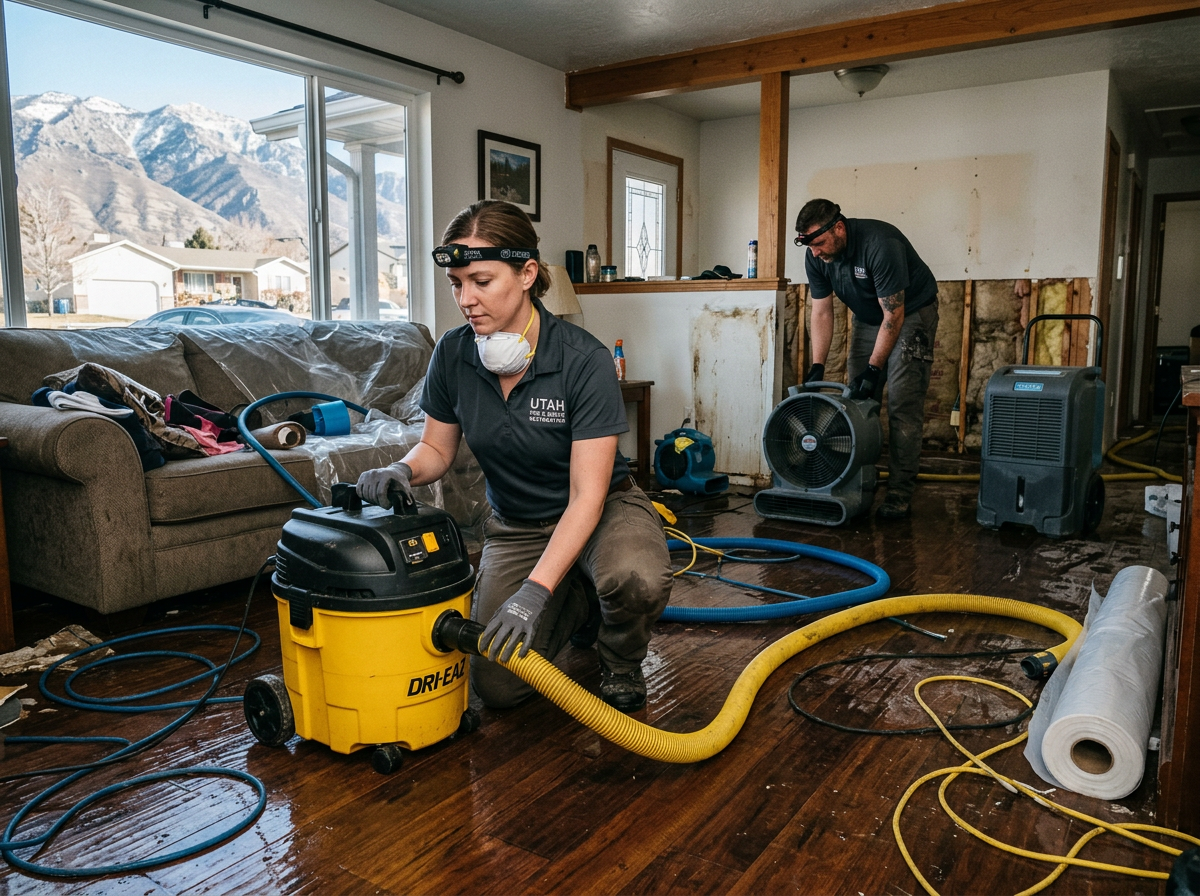
Firefighting water in Payson homes often needs extraction within the first 24 to 48 hours to limit absorption into subfloors and walls. At elevations near 4,700 feet, overnight lows frequently drop below freezing, turning residual moisture into ice that expands and cracks materials. The dry Utah air then accelerates evaporation of remaining water while carrying soot particles deeper into unaffected rooms.
Freezing Risks at Local Elevations
Payson sits at an elevation where winter temperatures regularly reach 20 degrees or lower, causing suppression water to freeze inside cavities and under flooring. Ice expansion can separate baseboards and force water into adjacent rooms that escaped the original fire. Homeowners should check for ice crystals along baseboards and in crawl spaces within the first day after suppression ends. Once frozen, the water must thaw gradually with controlled heat to avoid sudden releases that soak insulation and drywall. This process differs from conditions in southern Utah, where inversion-free climates allow faster natural drying without the added freeze-thaw cycle.
Extracting Water and Initial Drying
Standing water should be removed with pumps or wet vacuums before it migrates into wall cavities. After extraction, industrial air movers and dehumidifiers are positioned to pull moisture from carpets, subfloors, and framing. In Payson winters, equipment often runs continuously for three to five days because cold air holds less moisture and slows evaporation. Monitoring moisture meters at multiple depths helps confirm when wood framing returns to acceptable levels below 15 percent. Failure to reach these readings can allow hidden dampness to support mold growth weeks later.
Addressing Soot Mixed with Water Residue
Wet soot from firefighting water bonds differently than dry soot and requires pH-neutral cleaners to avoid setting stains on surfaces. The Wasatch inversion can trap odors from this mixture for weeks if rooms are not ventilated properly after drying. Protein-based soot from kitchen fires dissolves in water and leaves a sticky film that spreads during mopping, while dry soot from structural fires remains powdery until disturbed. Each type needs separate cleaning sequences to prevent cross-contamination between rooms. Soot and Residue Cleaning addresses these residue differences directly.
Preventing Secondary Issues
Lingering moisture after firefighting often leads to mold on drywall and insulation if not dried within the first week. Payson homes with limited airflow in basements are especially prone because cold air settles and keeps surfaces damp. Regular checks of hidden areas behind cabinets and under stairs catch early growth before it spreads. When mold appears alongside water damage, targeted remediation prevents long-term air quality problems. Mold Remediation provides the next step once drying is complete.
Coordinating with Broader Restoration
Water removal forms the first stage of any fire damage restoration project in Payson. Once surfaces are dry, attention shifts to smoke odor and residue that the inversion holds in place through winter. Homeowners in nearby Mapleton and Salem face similar elevation-driven challenges and often follow the same drying timeline. What Affects Fire Damage Restoration Timelines in Utah County outlines how local weather extends each phase. Fire Damage Restoration covers the full sequence from water extraction through final cleaning.