
2026-09-14 ·
Preventing Mold After Fire and Water Damage in Payson Basements
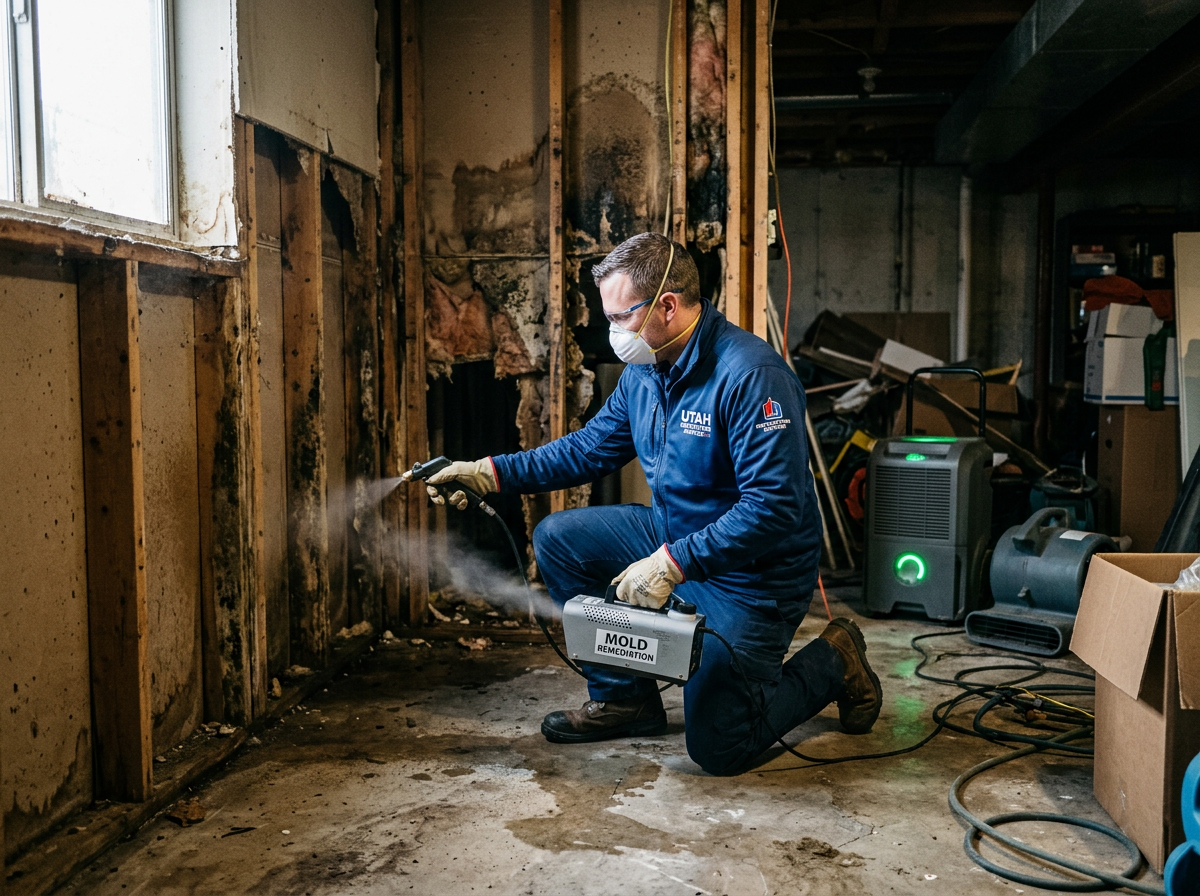
Mold can be prevented in Payson basements after fire and water damage when excess moisture is removed within the first 48 hours and soot is cleared before it binds to surfaces. Utah winters bring freezing temperatures that can trap water in lower levels, while dry air spreads soot particles that hold odor and residue. The Wasatch inversion often holds moisture and smells in place through cold months, raising humidity in enclosed spaces like basements. Acting on both the water and the soot together reduces the chance for mold to take hold in concrete or wood.
Managing Suppression Water in Cold Utah Weather
Payson sits at an elevation where overnight lows frequently drop below freezing in winter, allowing suppression water to freeze inside walls or under floors before it can be extracted. Frozen water expands and later thaws into hidden pockets that feed mold on framing or insulation. Homeowners can reduce this risk by opening basement windows during daytime hours above 40 degrees to promote airflow and using fans to move air across damp surfaces. Checking for ice in lower corners and along foundation walls helps locate trapped moisture early. When water has already soaked into porous materials, professional water extraction prevents repeated freeze-thaw cycles that keep surfaces wet for days. Linking water removal steps with soot cleaning avoids spreading residue while surfaces are still damp.
Clearing Different Types of Soot Before It Feeds Mold
Protein, dry, and wet soot each behave differently on basement surfaces and require separate removal steps to keep mold from growing on the remaining film. Dry soot from structural fires travels on Utah's low-humidity air and settles on cooler basement walls where it can absorb later moisture. Wet soot from smoldering materials leaves an oily layer that seals in water and blocks drying. Removing these residues before humidity rises prevents the organic particles from becoming a food source for mold. Homeowners should avoid wiping soot with plain water, which can drive particles deeper into concrete or carpet backing. Targeted cleaning methods that lift residue without adding moisture keep the basement drier overall and reduce the conditions that allow mold colonies to form within a week.
Controlling Humidity During Wasatch Inversion Periods
The inversion layer that settles over southern Utah County in winter traps moisture near the ground and limits natural ventilation in Payson basements. Relative humidity can stay elevated for days even when outdoor air feels dry at higher elevations. Running a dehumidifier set to 50 percent or lower pulls excess water from the air before it condenses on cold walls. Sealing obvious air leaks around windows and doors while still allowing controlled exhaust prevents the buildup of damp air that inversion weather holds in place. Checking humidity levels twice daily during cold snaps shows whether drying progress is holding or slipping backward. These steps work together with soot removal to limit the window in which mold spores can activate on damp, residue-covered surfaces.
Coordinating Fire and Water Restoration Steps
Fire damage restoration often leaves behind both water and soot that must be handled in sequence to avoid creating mold conditions. Water damage restoration crews can extract standing water and set up drying equipment before soot cleaning begins, preventing residue from being redistributed onto wet materials. Once surfaces are dry, soot and residue cleaning removes the particles that would otherwise remain as a nutrient source. In Payson homes near the wildland-urban interface, smoke from nearby fires can enter basements through vents even when the structure itself is untouched, adding another layer of residue that needs attention. Homeowners who schedule these services in order reduce the total time moisture remains present. See related guidance on local wildfire smoke effects on homes in southern Utah County for more detail on how regional fires influence indoor conditions.
Knowing When Professional Mold Remediation Is Needed
When basement materials remain damp beyond three or four days after initial water removal, visible mold or a persistent musty odor signals that further steps are required. Mold remediation addresses colonies that have already formed while preventing spread to adjacent rooms. Technicians can test moisture content in wood and drywall to confirm drying has reached safe levels below 15 percent. Homeowners in Payson can request an inspection from Utah Fire Recovery at 675 S 100 W #3 if they notice recurring humidity or staining after a fire event. Early professional involvement keeps small moisture issues from turning into larger remediation projects later in the season.