
2026-09-14 ·
How Summer Dryness Increases Fire Risk Around Payson Properties
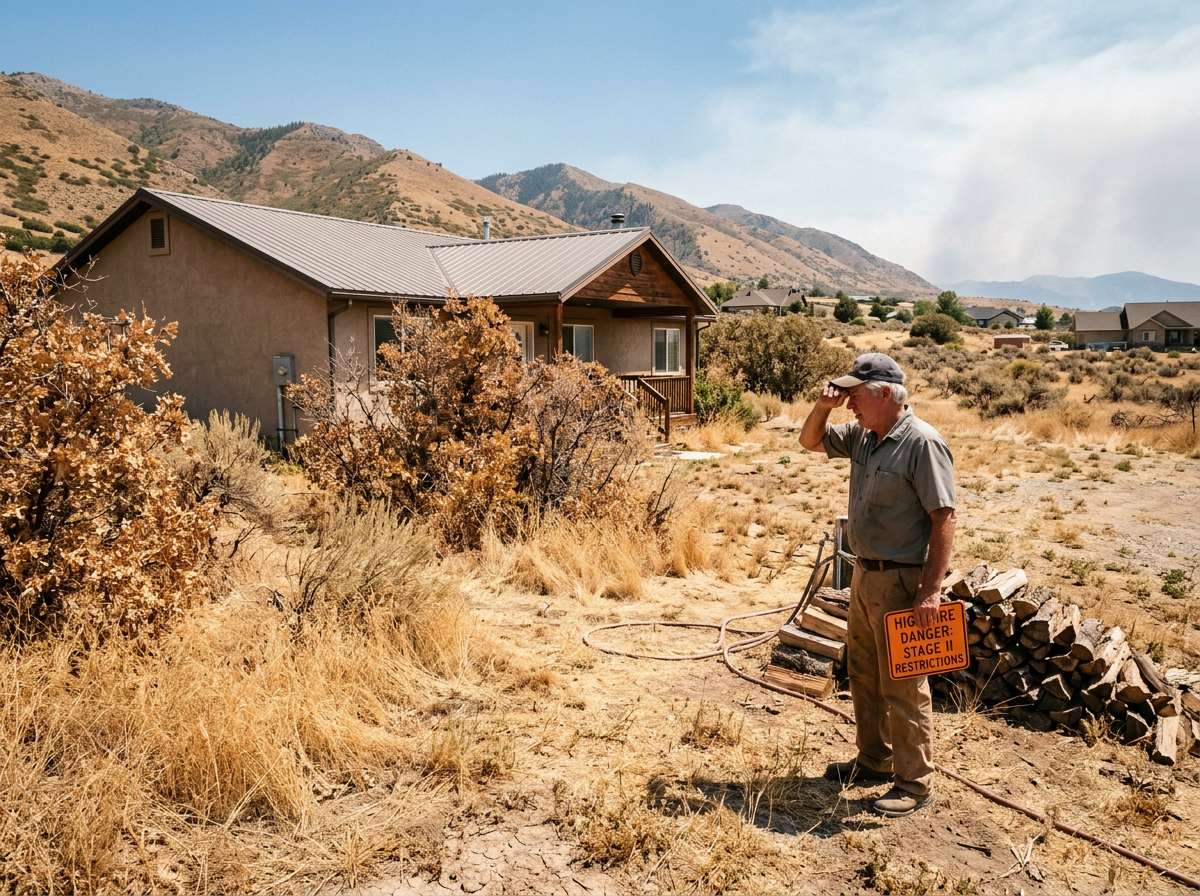
Summer dryness around Payson increases fire risk when relative humidity stays under 20 percent for multiple consecutive days, allowing fine fuels like cheatgrass and oak brush to lose moisture quickly and ignite from lightning or equipment sparks. At elevations near 4,600 feet, daytime highs in the mid-80s combined with clear skies pull moisture from plants faster than in lower valleys. The result is a longer window each afternoon when a single ember can start a fire that spreads into the wildland-urban interface surrounding the city.
Low Humidity and Fuel Moisture
Payson sits on the edge of the Wasatch Mountains where summer afternoons routinely drop relative humidity into the teens. When fuel moisture in grasses falls below 10 percent, ignition probability rises sharply even from small heat sources such as mower blades striking rocks. Residents notice this change in late June through August when lawns brown within a week without irrigation. The same dry air also carries embers farther across open fields east of 675 S 100 W #3 before they land on roofs or decks.
Wildland-Urban Interface Conditions
Properties on the south and east sides of Payson border continuous stands of Gambel oak and sagebrush that cure early in the season. Once these fuels dry, a fire starting on the mountain slope can reach residential streets in under an hour under 15 mph winds. Homes in Mapleton and Salem face similar exposure because the same dry ridge systems extend south along the valley. Keeping 30 feet of cleared space around structures becomes more critical when humidity remains low for a week or longer.
Indoor Air and Soot Movement
Dry outdoor air entering homes through open windows pulls fine soot particles deeper into fabrics and HVAC systems before residents detect an odor. In Payson, this effect shows up most clearly after a small kitchen or electrical fire because the low moisture prevents soot from clumping and settling quickly. Recognizing hidden smoke damage in Payson ductwork explains how particles travel through return vents when humidity is low. Early inspection of filters and registers helps limit long-term odor issues.
Practical Steps for Property Owners
Check vegetation moisture by snapping small branches; if they break cleanly instead of bending, fuels are ready to burn. Clear pine needles and leaves from gutters weekly during July and August when dryness peaks. Store firewood at least 30 feet from the house and cover it to retain some moisture. For properties near the foothills, consider replacing wood mulch with gravel in the first 5 feet around the foundation. These actions directly address the conditions created by extended low-humidity periods.
When Smoke Enters the Home
Even without a fire on the property, smoke from distant wildland fires can infiltrate Payson homes through gaps around doors and attic vents. The dry air keeps particles suspended longer, allowing them to reach bedrooms and closets on upper floors. Fire damage restoration teams use air scrubbers sized for the square footage to pull these particles out before they embed in insulation. Prompt attention prevents the need for larger smoke damage restoration work later in the season.