
2026-09-14 ·
How Wind-Driven Fires Affect Homes on Payson’s East Bench
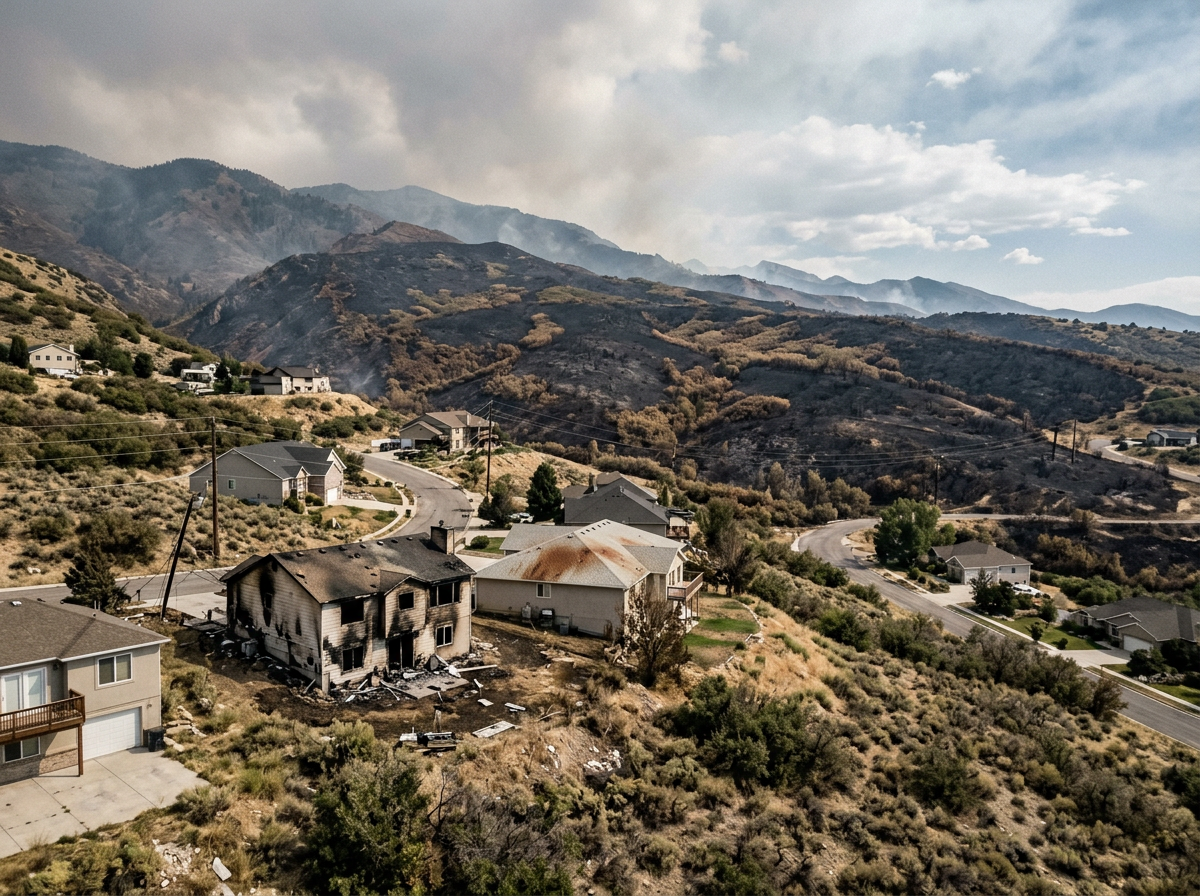
Wind-driven fires send soot and smoke particles several miles onto Payson’s East Bench through the wildland-urban interface, leaving residue on homes that never burned. Dry Utah air lets fine particles travel farther than in humid regions, while higher elevations around the bench slow suppression water from freezing before it reaches structures. This creates layered deposits that require targeted removal rather than standard cleaning.
Wind Patterns Carrying Soot to the East Bench
Payson sits at the base of the Wasatch Range where afternoon winds often accelerate downslope. These gusts pick up embers and soot from fires miles away and deposit them on east-facing slopes. Homes on the bench receive a fine coating of dry soot that adheres to siding, roofs, and window screens. The same winds can push wet soot from suppression efforts when water mixes with ash, forming a sticky film that dries hard within hours. Because the bench rises several hundred feet above the valley floor, particles settle more readily on these elevated surfaces than on lower lots.
Soot Types and Their Behavior on Local Homes
Protein soot from burned food or household items forms a thin, oily layer that clings to fabrics and drywall. Dry soot appears as powdery black residue that spreads easily when disturbed. Wet soot, common after firefighters use water, creates a heavier sludge that can stain porous materials like brick and wood. Each type settles differently under wind pressure, with dry particles traveling farthest across the bench. Homeowners notice these deposits first on HVAC intakes and exterior trim where wind concentrates airflow.
Suppression Water and Elevation Effects
At Payson elevations, suppression water can freeze overnight when temperatures drop, leaving ice that later melts and spreads diluted soot into crawl spaces and basements. This delayed moisture creates secondary issues as it evaporates and leaves mineral stains. Wind-driven events often coincide with these temperature swings, so water used miles away can reach bench homes as frozen droplets that thaw indoors. The result is moisture trapped behind siding or under decks that homeowners may not notice for days.
Inversion and Odor Holdover Through Winter
The Wasatch inversion traps smoke odors near the ground through much of the winter, especially on the east bench where cold air pools. Wind-driven soot that arrives in fall can release odors again when inversion layers form, because fine particles remain embedded in insulation and carpet padding. This prolonged presence differs from southern Utah areas that avoid inversion and see faster odor dissipation. Residents may detect the smell strongest in upper floors where warm air rises and stirs settled residue.
For homes already showing these effects, fire damage restoration addresses the initial deposits while smoke damage restoration targets lingering particles in HVAC systems. Related conditions appear in local wildfire smoke effects on homes in southern Utah County. Soot and residue cleaning focuses on the specific soot types that wind carries to the bench.