
2026-09-14 ·
Step-by-Step Guide to Assessing Fire Damage in Your Payson Attic
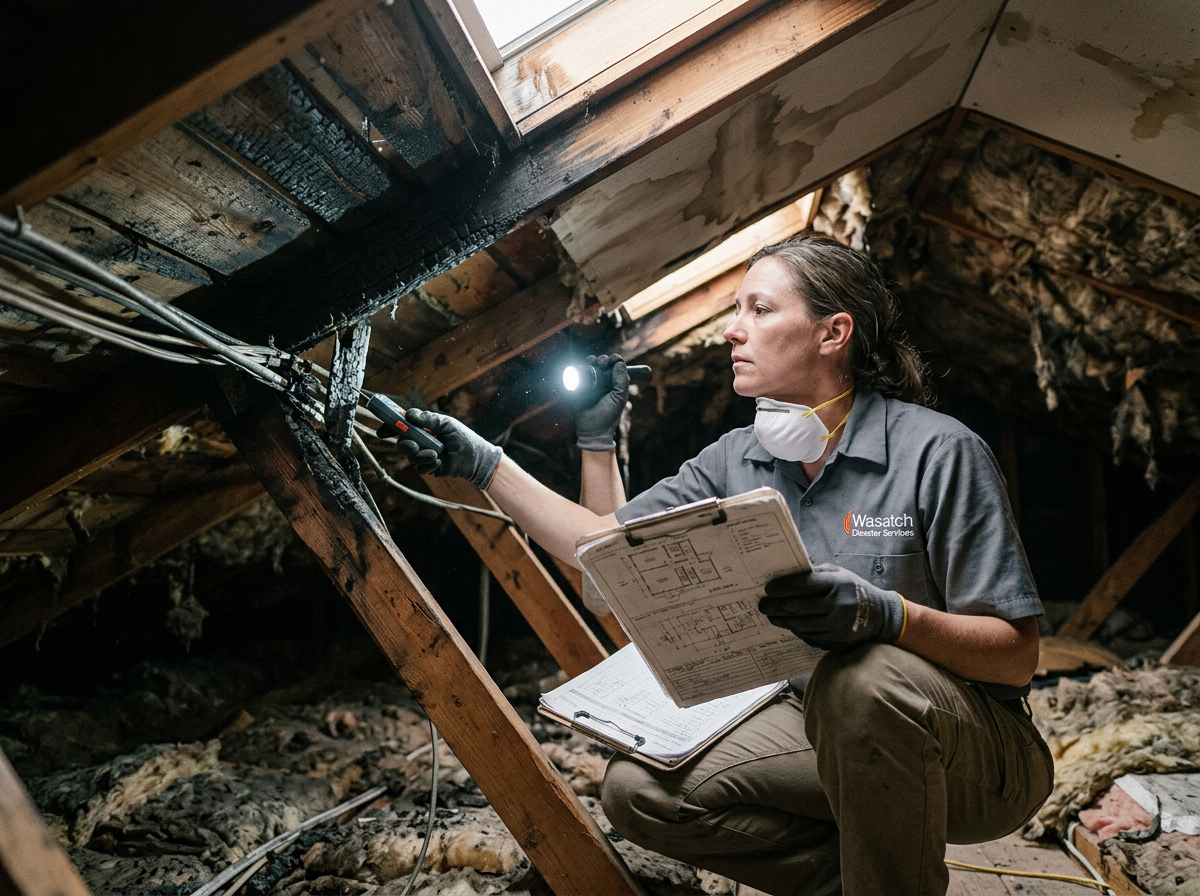
Assessing fire damage in your Payson attic begins with entering through the access point and scanning for visible residue lines along rafters and insulation edges that show how smoke moved through the space.
Safety Precautions Before Inspection
Before climbing into the attic, shut off power to the area at the breaker panel and use a headlamp rather than relying on attic wiring that may have been compromised. Wear an N95 respirator and gloves to avoid inhaling fine particles that settled after the fire. In Payson homes near the wildland-urban interface, check for structural sagging caused by heat before putting weight on joists. Document every step with photos that include timestamps so the record stays clear for any follow-up work. Avoid disturbing insulation until the full extent of residue is mapped.
Mapping Soot and Residue Patterns
Start at the attic hatch and move outward in a grid pattern, noting whether the soot appears dry and powdery or oily and smeared, since each type requires a separate cleaning approach later. Dry air common in Utah County often carries fine particles farther than expected, leaving thin films on the back sides of rafters and around electrical boxes. Protein soot from kitchens tends to create yellowish stains that smell even after the source fire is out. Record the locations of heavier buildup near vents or gable ends where outside air pulled smoke upward during the event. These observations help determine the reach of smoke damage beyond the immediate burn area.
Checking for Suppression Water Effects
Suppression water left in the attic can freeze at Payson elevations once winter temperatures drop, expanding and cracking wood members or ceiling drywall below. Look for water stains that run parallel to the roof deck or pooled areas in low spots of blown-in insulation. Wet insulation loses R-value quickly and can lead to hidden mold if drying is delayed. Compare the moisture meter readings you take on wood surfaces against unaffected areas in the same attic to see the true extent of saturation. In milder southern Utah conditions the drying window is longer, but local winter inversions can slow evaporation and keep moisture trapped longer.
Evaluating Odor Retention and Airflow
The Wasatch inversion that settles over Utah County during winter months often holds smoke odors inside attics for weeks because cold air at the roofline prevents normal venting. Sniff along the ridge line and near soffit vents to locate pockets where odor concentrates. Protein residues tend to re-emit smells when humidity rises, even if the original fire was small. Note any HVAC ducts that run through the attic, since smoke can travel through them into living spaces below. These details guide decisions on whether additional ventilation or sealing work is needed during restoration.
Documenting and Planning Next Steps
Create a simple sketch of the attic layout with notes on each finding, then photograph every marked area from multiple angles for reference. Compare your observations against the related article on what affects fire damage restoration timelines in Utah County to understand typical drying periods. If electronics stored in the attic show residue, review guidance in the post about cleaning electronics after smoke exposure in Payson homes. Once the assessment is complete, contact a local team for fire damage restoration or smoke damage restoration to address the specific residue types identified.